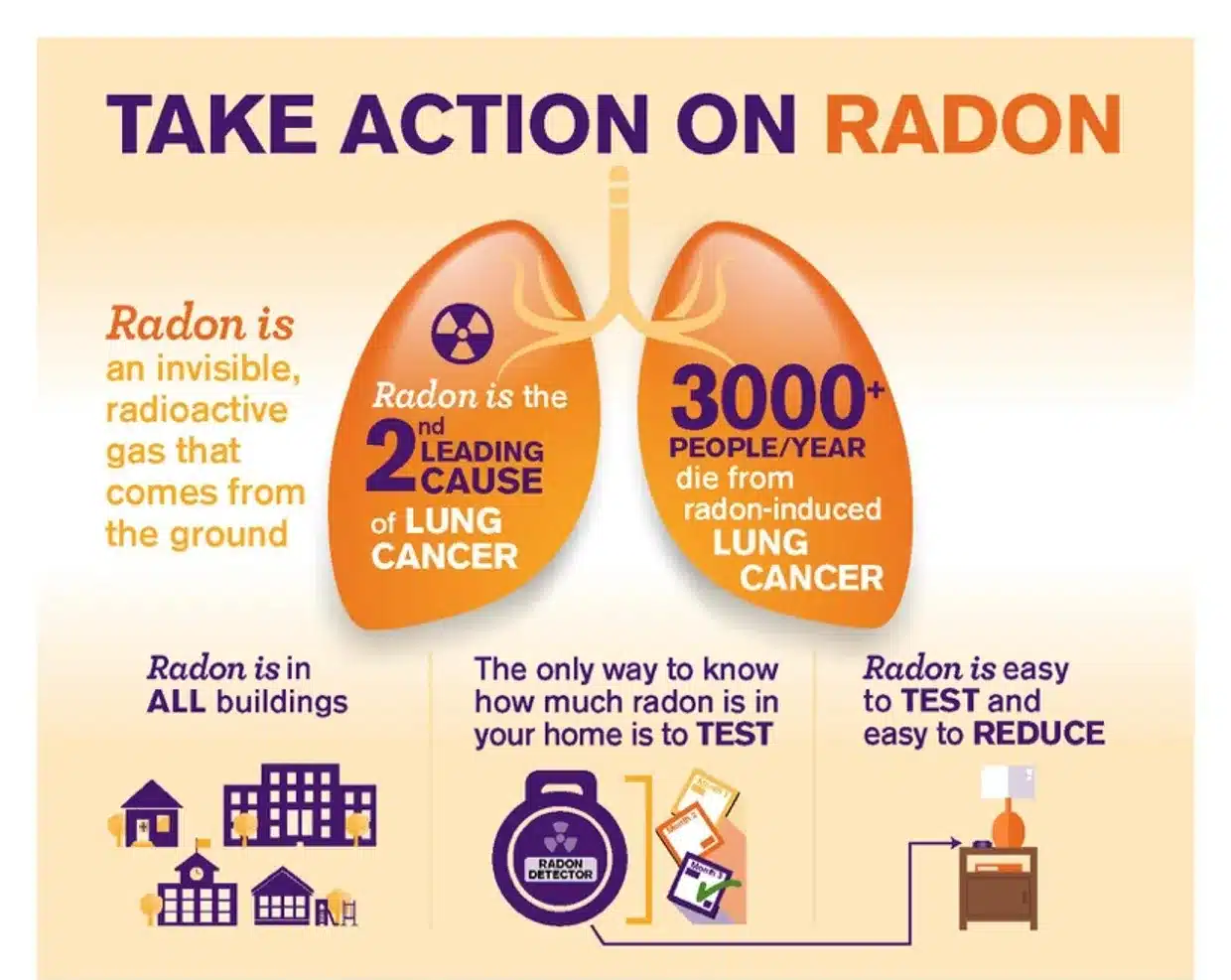
Radon is a naturally occurring radioactive gas formed by the breakdown of uranium in soil, rock, and groundwater. It is colourless, odourless, and tasteless, which means the only way to know if it is present in your home is to test for it.
Radon is the second leading cause of lung cancer overall and the leading cause of lung cancer in non-smokers. It is estimated to account for about 16% of lung cancer deaths. When radon enters enclosed spaces such as homes or businesses, it can accumulate to elevated levels. Long-term exposure to high concentrations increases the risk of developing lung cancer.
Radon dilutes quickly in outdoor air and is typically not a concern outside. Problems occur when the gas becomes trapped and accumulates inside enclosed spaces such as homes and buildings.
In Canada, radon is measured in becquerels per cubic metre (Bq/m³). A becquerel represents one radioactive decay per second. For example, a result of 200 Bq/m³ means that in every cubic metre of air inside the home, approximately 200 radioactive decays are occurring each second.
Health Canada recommends taking action to reduce radon levels at 200 Bq/m³ or higher. For comparison, the United States action level is about 148 Bq/m³ (4.0 pCi/L), and the World Health Organization recommends a reference level of 100 Bq/m³.
Radon concentration levels will vary from one house to another, even if the buildings are similar designs and next door to each other. No matter the age, type of construction, or where your home is located, the only way to ensure you have safe levels of radon gas in your home is to test for it.
How does radon enter my home?
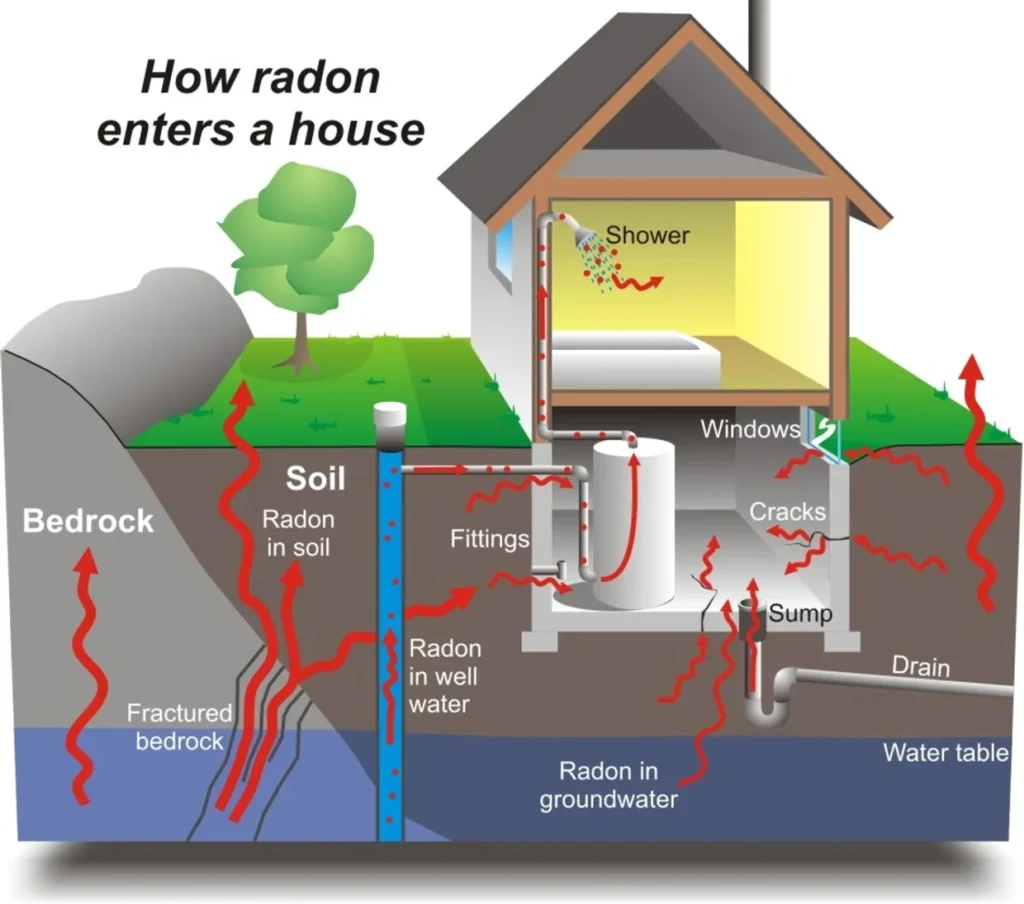
Radon can enter a home in several ways. Because it comes from the soil, the gas moves through any openings where the building touches the ground. Common entry points include foundation cracks, sump pits, floor drains, gaps around pipes and utility penetrations, crawl spaces, and other small openings in the slab or foundation.
The main reason this happens is pressure difference. Air pressure inside a home is usually slightly lower than the pressure in the soil surrounding it. This creates a gentle vacuum effect that draws soil gases including radon into the house as air tries to equalize.
Radon levels are typically higher indoors because the gas can become trapped and accumulate over time, especially during colder months when homes are closed up.
How does radon impact my health?
Radon impacts your health by decaying into radioactive decay products that are easily inhaled and deposited in the lungs where they emit radiation and damage sensitive lung tissue.
According to Health Canada, radon gas is responsible for 1 out of every 6 lung cancer deaths and is the leading environmental cause of lung cancer.
Exposure to high levels of radon and the use of tobacco together significantly increases your risk of lung cancer. If you are a lifelong smoker your risk of getting lung cancer is 1 in 10. If you add long term exposure to a high level of radon, your risk becomes 1 in 3. As a non-smoker, your lifetime lung cancer risk, at the same high levels of radon are 1 in 20.
In this video Aaron Goodarzi explains the science and the long term health effects radon has on the human body.
About Parkland Radon
We are a certified C-NRPP testing and mitigation company based out of Inglis, Manitoba. We strive to always provide the best quality work at a reasonable price.